
Aloo Phulkopir Rasa
Aloo -Kopir Rasa- Rasa pronounce as ʺ Raw-Saʺ. It is a thicker, slightly spicier version of the famous Bengali vegetarian curry Aloo- Kopir Dalna, which used to be a winter delicacy in Bengali kitchen. Aloo means Potato, and Phulkopi means cauliflower.
Aloo Phulkopir Rasa – Rasa pronounce as “Raw-Sa“. It is a thicker, slightly spicier version of the famous Bengali vegetarian curry Aloo Phulkopir Dalna, which used to be a winter delicacy in Bengali kitchens. Aloo means Potato, and Phulkopi means cauliflower.
Rasa and Dalna are both no-onion, no-garlic curries.
Dalna is a thin, pourable mild gravy served with steamed rice, and Rosha is a semi-dry yet pourable curry served with fried rice, Pulao, Luchi, and Paratha. As the Indian Hindu festive season is approaching, this curry recipe is perfect for the festive season with minimal effort. It is a sattvic dish, with no onion and garlic added.
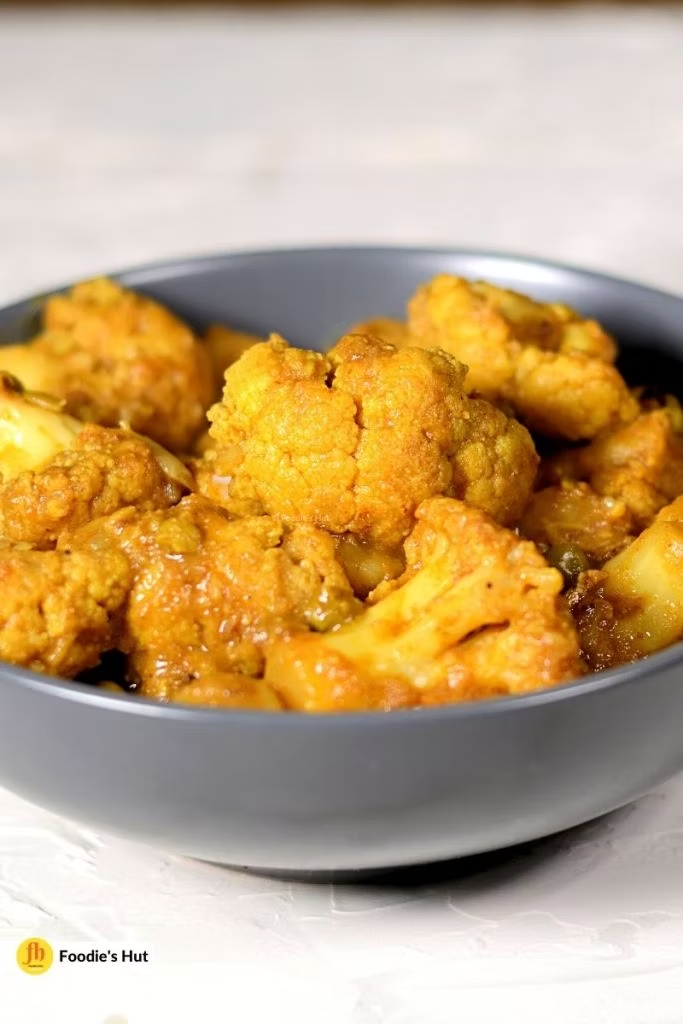
Aloo Phulkopir Rasa
Minimum Ingredients, maximum Flavour!
Curries have a reputation for being difficult to make on weeknights. They are time-consuming, require a lot of prep work, and require a special trip to the local Indian store to track down spices if you don’t cook them frequently. They are also high in fat, so they are heavy on the stomach, and so on!
But this vegetarian curry is one of those dishes where you add minimum ingredients and get maximum flavour! You can make it any time of the week with minimal effort and not high in fat, as most popular Indian curries are known for.
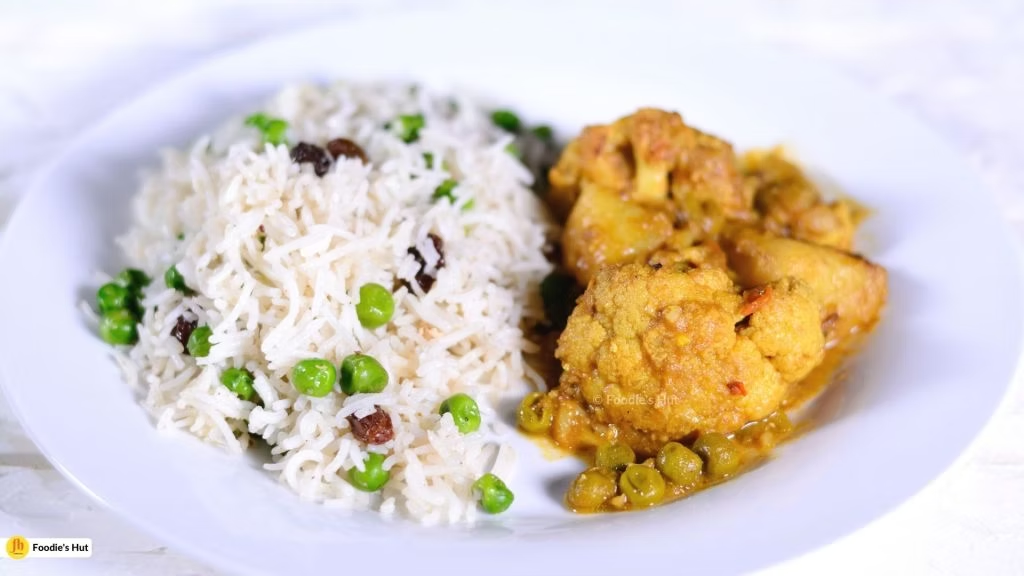
Aloo Phulkopir Rasa in a meal
Cook from scratch without going to a local Indian store for spices!
It is made from scratch with fewer spices. You don’t even need a trip to the supermarket if you use basic spices in your everyday cooking, such as whole and ground cumin, chilli powder, and turmeric powder.
Being a Bengali, cooking curry in Mustard oil is my obsession. I love the pungent flavour of mustard oil. But if you are not familiar with cooking with mustard oil, then don’t bother making a trip to the Indian store—make it with vegetable or canola oil! But make sure next time you visit your local Indian store, you try to make at least one small bottle of mustard oil for your Bengali-style cooking.
What particular dish goes with this curry, Aloo Phulkopir Rasa?
Aloo Phulkopir Rasa can be served with any flavoured rice, such as Jeera rice, Bagara Bhaat or Peas fried rice. Sometimes, I paired this with plain Roti.
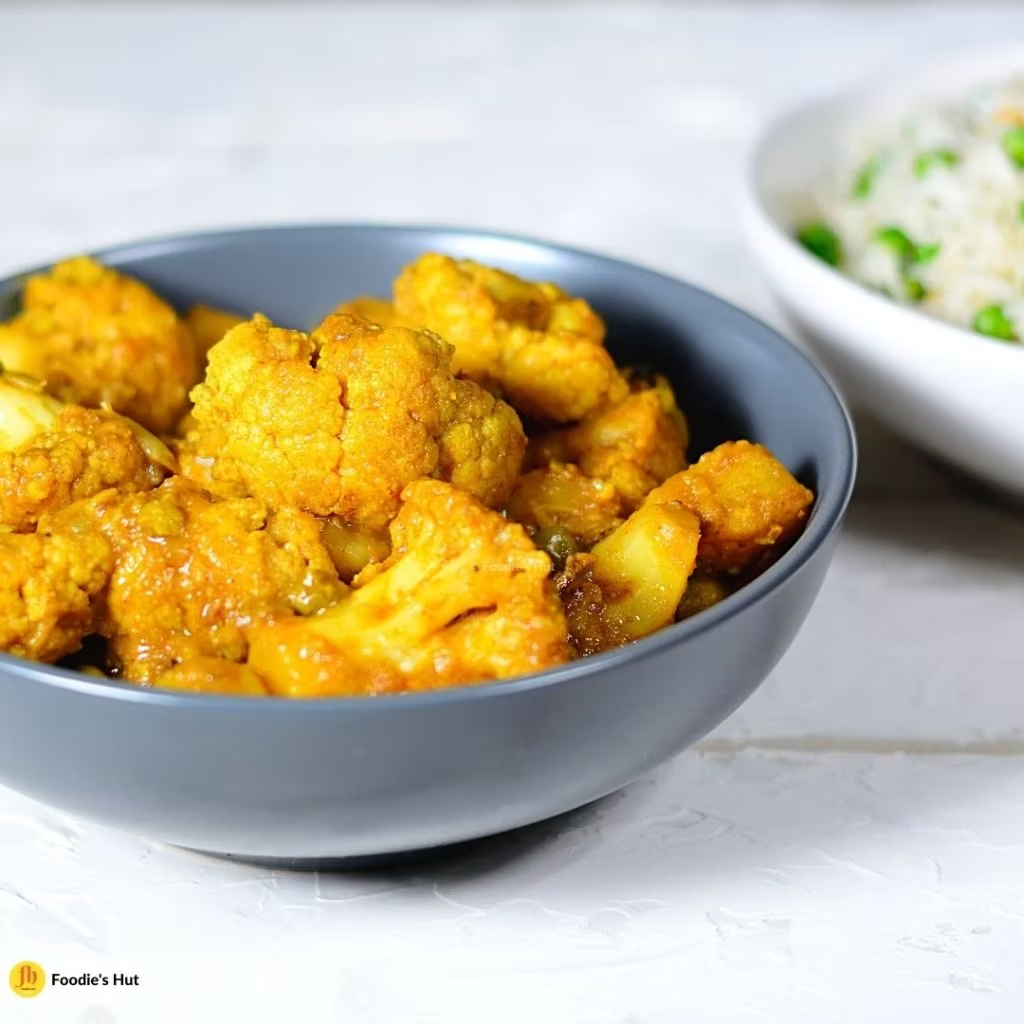
Aloo Phulkopir Rasa
Ingredients
Method
-
Step 1
Cut cauliflower into medium size florets and wash and keep the florets in a mixing bowl
-
Step 2
Sprinkle salt and pour boiling water. Cover with a lid for 10 minutes.
-
Step 3
Drain the cauliflower and rub salt and turmeric powder. Keep aside for another 10- 12 minutes.
-
Step 4
Take a bowl filled with water. Peel the skin off the potato and cut it into dice pieces.
-
Step 5
Put the diced potato in the bowl. Wash the potato pieces a few times, rub salt and turmeric powder into the potato pieces, and keep them aside.
-
Step 6
In a bowl, add grated ginger, cumin powder, turmeric powder, red chilli powder, salt, sugar and 1/8 cup of water to make a spice slurry.
-
Step 7
Pour mustard oil in a pre-heat a Kadhai or Dutch oven, save about 2 tbsp of oil and heat up oil over medium heat. Once the oil reaches a smoky heat, reduce the heat to low and sprinkle a few pinches of salt.
-
Step 8
Add the marinated potato and fry over medium to medium-high heat until almost 80% cooked through. Remove from oil.
-
Step 9
Add cauliflower in the remaining oil and fry the cauliflowers over medium heat until they develop brown colour on the edges. Remove from oil.
-
Step 10
Pour the remaining 2 tbsp oil into the cooking pot and let it hot.
-
Step 11
Add dry red chilli, bay leaves, whole spices, and cumin seeds to the hot oil and stir for a few seconds to homogenise the flavour of the oil and spices.
-
Step 12
Add chopped tomato and cook till the tomato softened.
-
Step 13
Add the spice slurry and ⅛ cups of water. You will notice the spices settling in the bottom of the cooking pot. Stir with a spatula, and cook over high heat until the liquid starts bubbling from the edges.
-
Step 14
Cover with a lid, reduce the heat to medium, and cook until the raw flavour of the spice is removed.
-
Step 15
When the spice mix is well roasted, it will start separating from the oil.
-
Step 16
Add fried potato, cauliflower and peas. With the help of a spatula, toss the vegetables in the spice mix.
-
Step 17
Sprinkle a little bit of water and increase the heat to high. The vegetable will start soaking up the spice mix and flavour.
-
Step 18
Add warm water. Give a stir.
-
Step 19
Over high heat, the liquid comes up to a rolling boil.
-
Step 20
Cover with a lid and reduce the heat to medium
-
Step 21
Simmer for a few minutes.
-
Step 22
Sprinkle garam masala and ghee.
-
Step 23
Increase the heat to high and wait for one last rolling boil.
-
Step 24
Turn off the heat, cover with the lid and wait for 10 to 15 minutes resting time before you serve.
Nutrition (per serving)
- Calories188.5 kcal
- Carbohydrate18.99 g
- Protein4.18 g
- Fat11.96 g
- Saturated fat2.55 g
- Sugar5.02 g
- Fibre4.74 g
- Sodium84.76 mg
- Cholesterol4.27 mg
Discover more recipes
More Vegetarian recipes

00:00